Back to the Table of Contents
Safety Devices full roof rack instructions for
1995-1997 NAS Defender 90 Station Wagon
The information on this page is to assist customers of ECR who have purchased a Safety Devices full roof rack with their installation.
Please do not link or post this page, or its contained information, to other internet sources.
First of all, thank you for your purchase!
This page will take you through the steps needed to install the SD rack system on a Defender 90 Station Wagon. If you need instructions for a Soft Top please go here.
The installation of the Safety Devices full roof rack can be a little tricky. Some items may need to be slightly modified and/or pushed/pulled into shape.
If you are uncomfortable with this type of custom vehicle work, or have very limited tools, you may want to think about having a professional install your rack system.
Tools you will need:
This is a minimum list. If you have more tools with sockets, extensions and such the job will be that much smoother.
Drill with 1/8", 3/16" and 3/8" drill bits, and phillips screw bit
Hammer and punch or automatic center punch
5mm allen wrench
8mmx1.25 tap and tap driver
10mm wrench
13mm wrench
2x 17mm wrenches
Tape measure
Masking tape and a marker like a Sharpie
Phillips screwdriver
Rat tail file or die grinder (possibly)
2 people (3 is better when putting the basket on top) will be required to lift and support the roof basket and rear ladder
A line up bar is a good idea as well
Anti-Seize compound for the threads on all the bolts is a wise idea
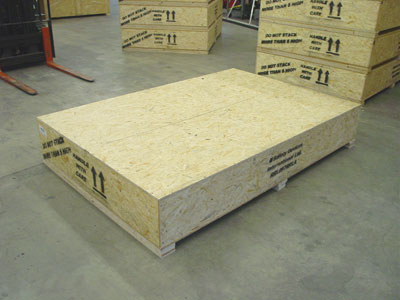
Start by opening up your crate. Make sure the "this side up" arrows are pointing up and then remove the perimeter screws of the lid with a cordless drill type tool and remove the lid.
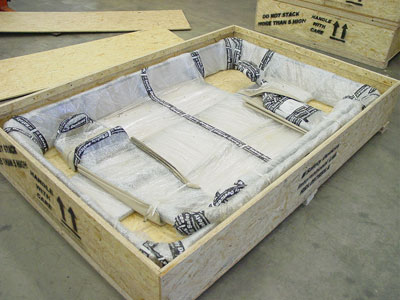
With the lid removed you will see the rack system.
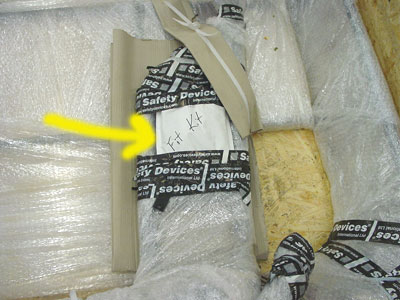
Taped to the rack you will find a bags that contains the needed hardware. It is a good idea to remove the bags and sort your hardware. Then you can start the very annoying job of removing all the protective materials.
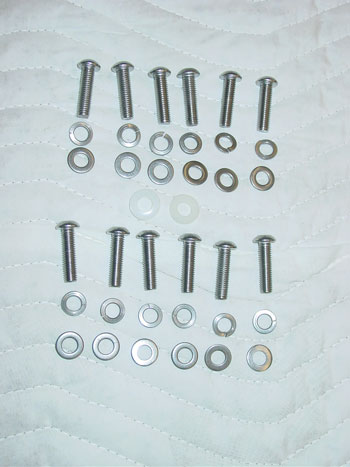
In the hardware bag from Safety Devices you will find 12 bolts that hold the ladder to the Rover. These bolts are too short and should be discarded. We have provided 12 correct length bolts and when combined with the lock washers and flat washers in the fitting kit you will end up with the bolts as seen above. These are the 12 set ups that are used to attach the rear ladder to the Rover.
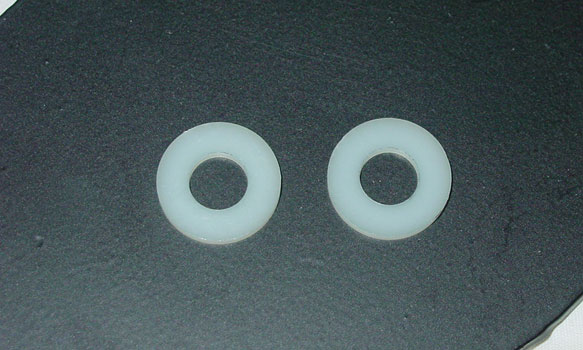
These 2 plastic washers are used to isolate the stainless steel bolts from the body on the LH lower mount.

These 8 set ups are the hardware that is used to attach the cross-bars to the safari cage feet.
Please note that some kits have bolts (as seen above) and some have allen headed bolts.
Both work equally well, it just depends on when your kit was shipped from ECR.
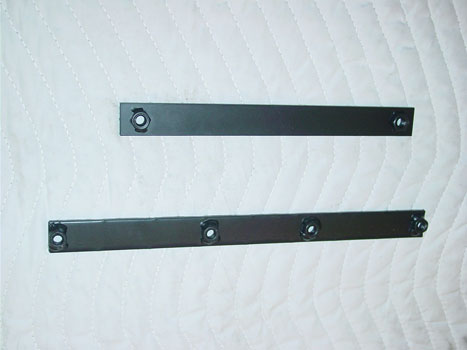
These are the LH backing plates. The top one goes behind the LH audio speaker and the bottom one goes in the wheel well just above the LH rear lights.

This is the RH backing plate. It goes behind the RH audio speaker.
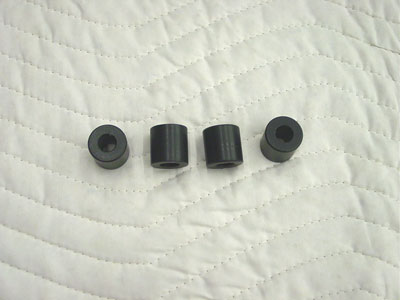
These 4 spacers are not used in the Station Wagon install. They are used for the Soft Top Defender 90 only.
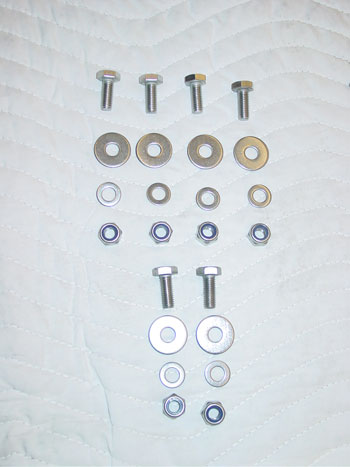
These are the bolts, washers and nuts that attach the roof basket to the crossbars and the rear ladder.
Below you will see the old original style feet. These are no longer made or sold, but in case you are fitting an older kit we will leave the information.
If you have the new ECR ROX feet please skip down to the picture of them.
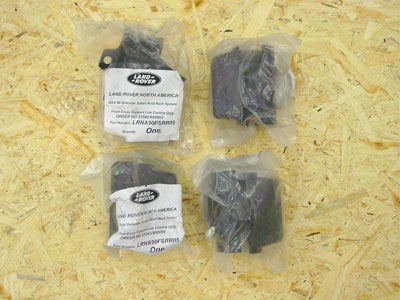
Along with the hardware you will find 4 rack feet.
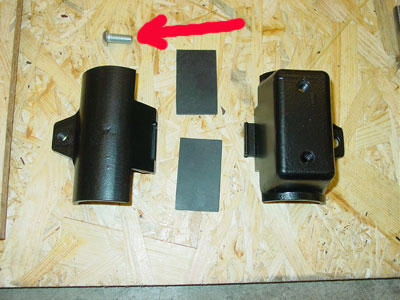
When you open the bags with the feet you will find a bolt that holds the clamp together (red arrow). Discard this screw as it is not stainless steel.
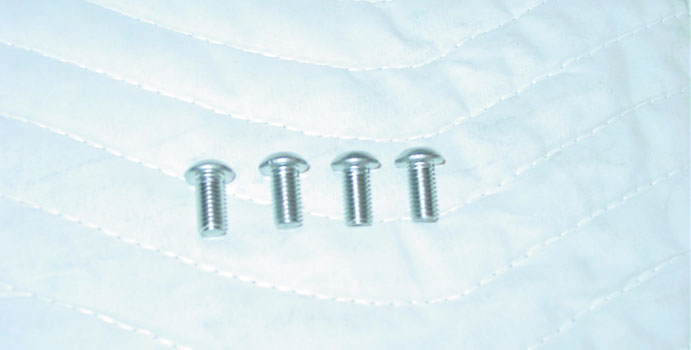
We have provided stainless steel (SS) replacements in our hardware kit.
Before you start the install take your 8mmx1.25 tap and some lubricant and tap out the 3 holes in each rack foot. BE VERY CAREFUL doing this so that you do not break a tap or damage the rack foot. We DO NOT HAVE ANY MORE RACK FEET. So if you damage one you will be out of luck.
Do not try to install any hardware into the rack feet until you have tapped out all the threads.
ECR ROX rack feet:
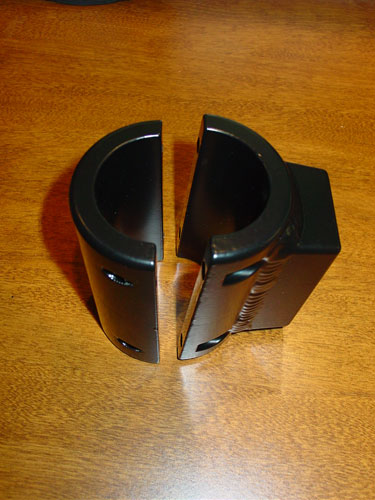
The new heavy duty ROX rack feet hold the roof rack in the same way, but they attach to the safari cage differently. They are a split 2 piece design, not a clam-shell design like the out of production units.
Install onto the truck is self explanatory Make sure to leave them loose so that you can adjust things as you go. When everything is set tighten them down a little at a time on each bolt to make sure they are square and you don't have a big gap on one side and none on the others.
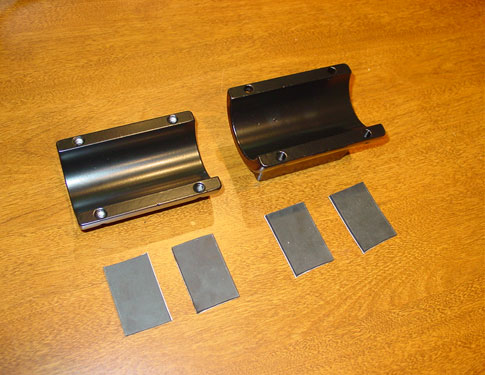
ASSEMBLY:
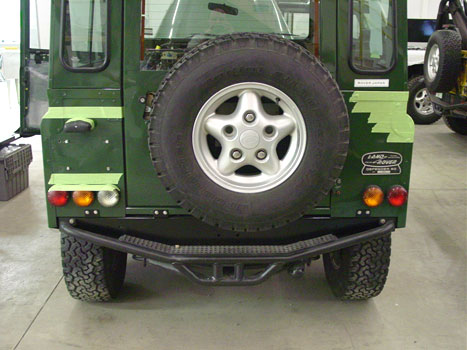
Park the Rover on safe level ground.
We suggest that you use some tape to protect the paint on your truck. Tape up the areas shown above.
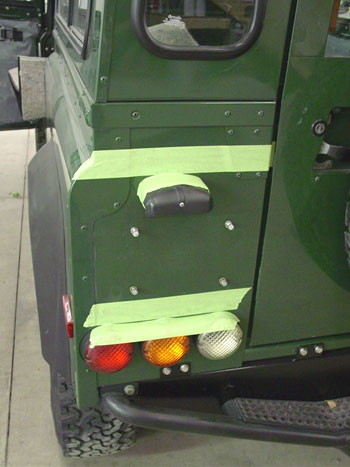
Also tape up the plate light spacer, as the rear ladder will rest on this and the tape will keep it from damaging the part.
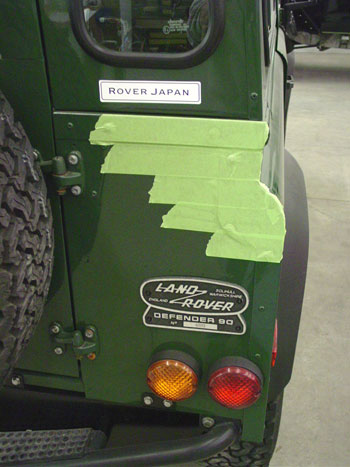
Be sure to tape up this area so that your paint does not get damaged.
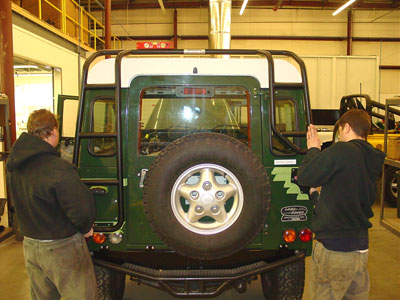
To start installing the rack, using 2 people, offer up the rear ladder to the rear of the 90. Start on the RH side of the Rover.
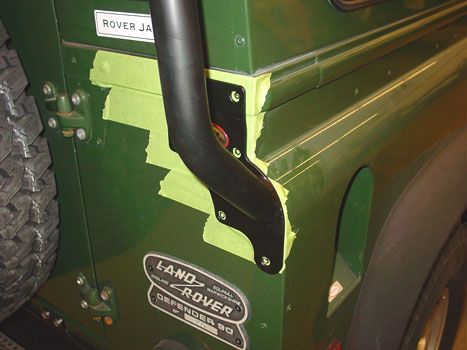
Hold the rear ladder so that it matches the lines of the truck and looks good. The mounting plate should not be too low or too high, it should nicely flow with the lines of the Rover. The lower two mounting holes on this side should line up with the 2 rivets on the body. You will see when it is right and when it is wrong.
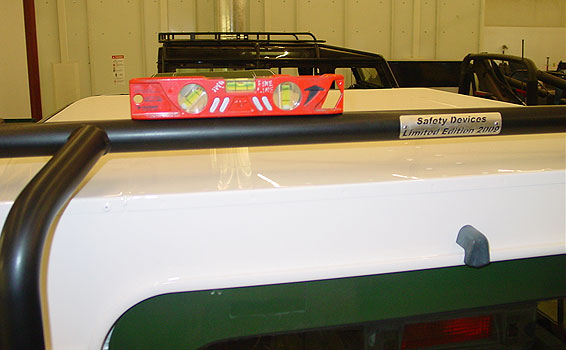
Use a level or your eye to make sure that the ladder looks good on the truck and that it is not tilted to one side or the other. You can also measure from the ladder down to the roof to check that things are correct.
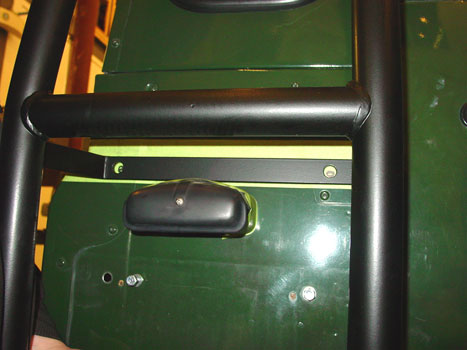
Once you are happy with the look of the rear ladder placement, mark the holes. We find that in most cases this part of the rear ladder is about 1/8" above the plate light if everything is in the right spot, but each Defender is different.
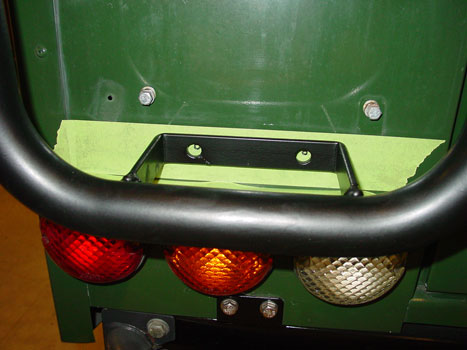
Mark the lower holes on the LH side as well and also mark the holes on the RH side.
Now take the rear ladder away from the truck.
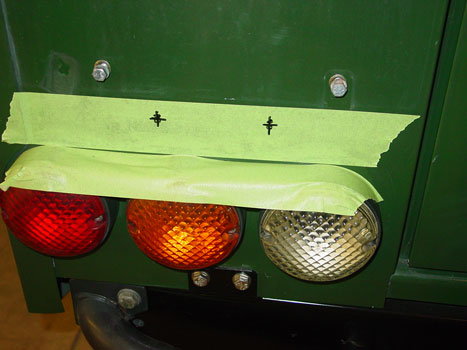
The lower LH mount holes will be shown on the tape as seen above, but this area has 4 holes in total for the ladder and its backing plate.

Locate the long backing plate and hold it up to the truck so that the 2 inner holes match up with your marks on the truck and mark the 2 outside holes.
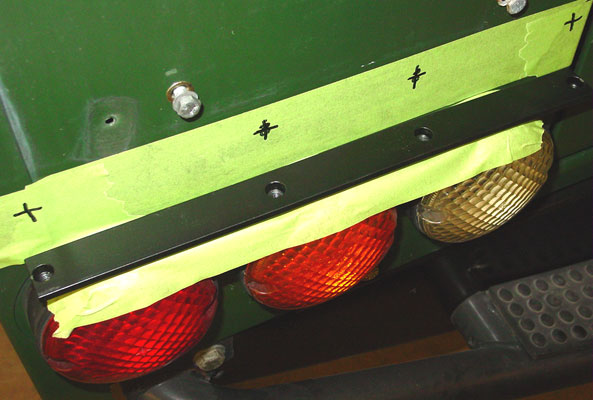
You will end up with marks like this. Be sure that the lower backing plate is in the right way. One way is right and one way is wrong. The right way is shown above.
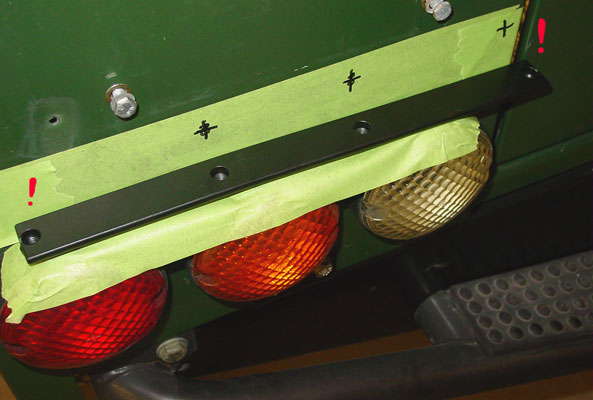
This is the wrong way, you can see that bolt hole farthest to the right would be off the body and into the door.
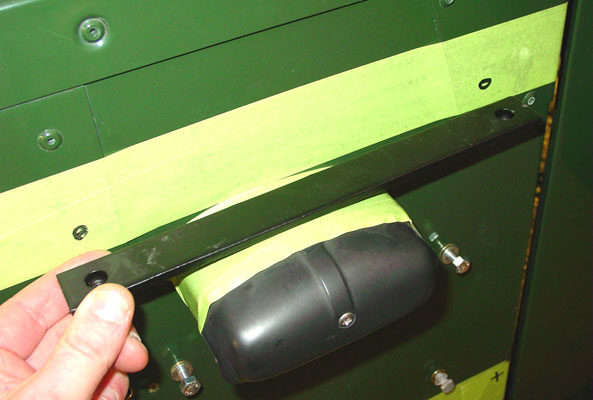
It is a good idea to check that the backing plates that go inside the car will line up with the holes you have marked.
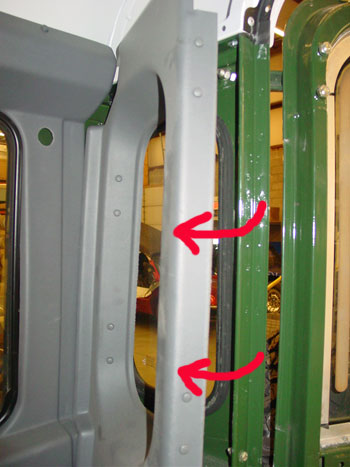
Before you drill and to get to the areas behind the rear speakers where the backing plates go you need to remove the LH and RH rear window trims. You do this by giving a sharp pull with 2 hands forward on the panel, as shown above. There are 2 spring clips that hold this panel in place. Set the panels aside for now. Be sure you know where the spring clips are as they can fall off the panel.
Note: When you re-install these rear panels you may have to collapse the clips a bit so that they bite onto the roof-side. This will make the panel secure so that it will not fall off or rattle.
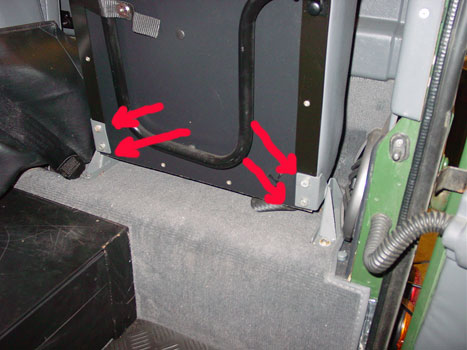
To make room to work and remove the speakers pods it is easiest to remove the lower sections of the rearmost jump seats. Remove the 4 bolts shown with the red arrows above and the jump seat base will come out and give you more room to work.
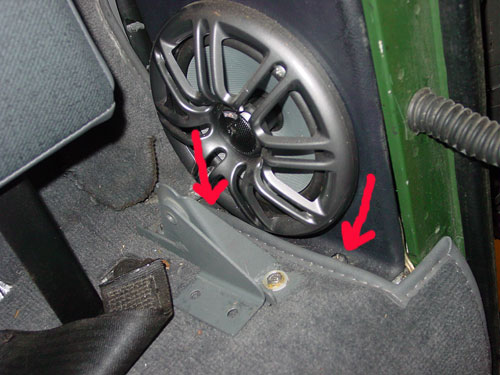
It is possible to remove the 2 screws that hold the speaker pod in place (red arrows) and remove the speaker pod without taking the jump seat bracket out, but if you don't want to risk damaging the speaker pod it will be easier for you to remove the jump seat bracket as it will give you more room.
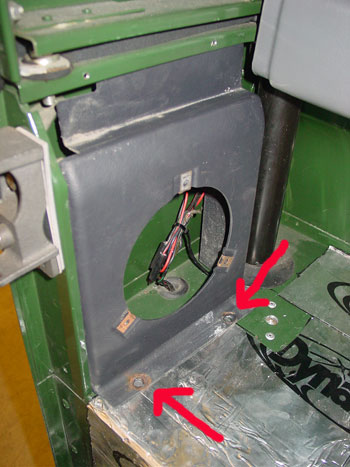
This image shows the rear speaker pod area in another truck with the carpet removed. You need not remove the speaker itself. The speaker was removed in these pictures because we are doing other work to this Defender. Once the 2 lower screws (red arrows) have been removed pull the bottom of the speaker pod out and rotate the pod out, unplug the speaker and set the pods aside.
Note: It is common that the screws to remove the speaker pods will be stripped and/or be rusted in place. You may have to drill or grind them off and replace them with new.
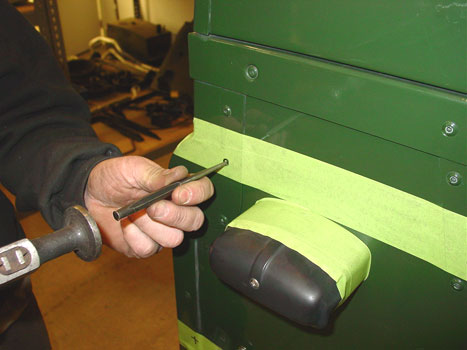
Next use a center punch and a hammer, or an auto-punch, and mark the holes to be drilled. Doing this prevents the drill-bit from walking and keeps the hole where you want it.
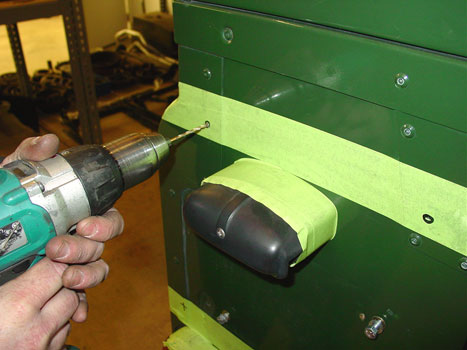
Once all the holes are center punched start by drilling a 1/8" pilot hole. Do not start with a large drill bit. Drill all the holes out with the 1/8" bit. Be sure there are no wires behind where you are about to drill.
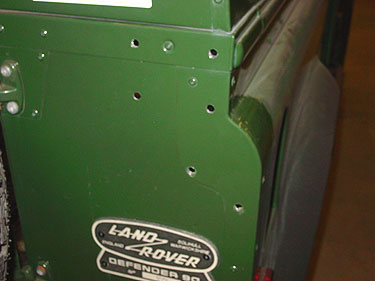
Then follow up with the 3/8" drill bit on all the holes and remove the tape. The RH side should look like this. You will have to drilled out two rivets on the body corner. If these holes goes off center, simply file it into shape.
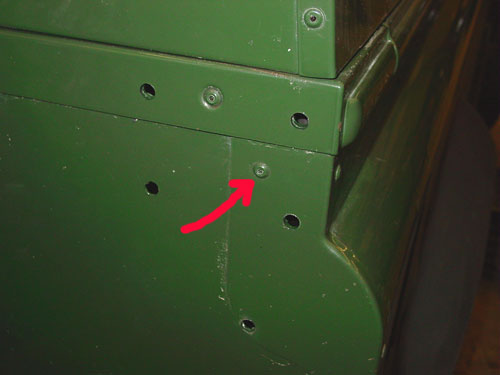
The RH body capping will have one rivet remaining near the top (see red arrow). You will need to drill this rivet out using a 3/6" drill bit, otherwise the back side of it will hold the interior backing plate too far away for the bolts to reach, and it would make the backing plate sit unevenly.
Now you can hold the backing plate inside the 90 and make sure all the holes line up. If they do not, do some filing or grinding until they do.
The corner cappings are made of steel, so before you install the ladder it is wise to use some primer and paint to touch up the raw steel edges so that rust does not occur on the steel parts. You can see we have done this in the image above with some Coniston Green paint. Do this on both sides of the truck.
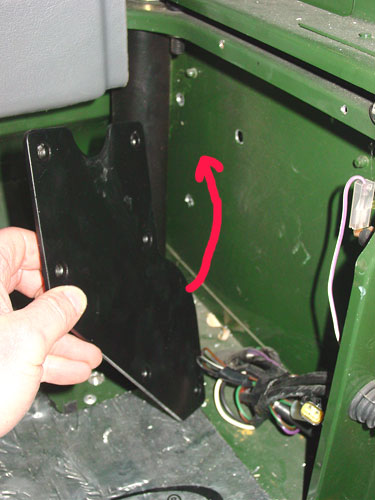
Now it is time to install the rear ladder. On the RH side offer up the backing plate. Then have the ladder held in the correct location outside the truck and start all the bolts from the outside, through the ladder, through the body and into the backing plate. You should use a flat washer and a locking washer on these bolts. Use the 5mm allen wrench to start the bolts. Do not tighten them all the way, only get them started.
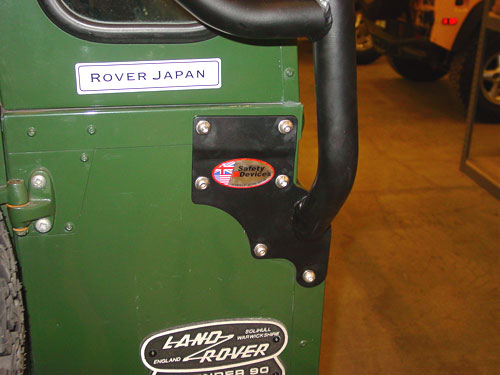
When that process is finished the RH side will look like this. It is almost a given that you will need to file, re-drill or open up some holes, or even grind or file a bit off here and there. No two Defenders are truly the same, so expect a little custom work to get all the bolts to line up with the backing plate. Do not force anything. Keep filing and adjusting until everything goes smoothly. Forcing things with SS bolts means they will most likely gall, and this will create a world of hurt for you trying to drill out bolts and get new hardware.
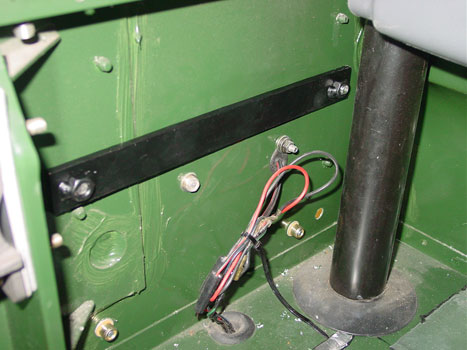
Now do the same on the LH side. Offer up the backing plate for the top holes...
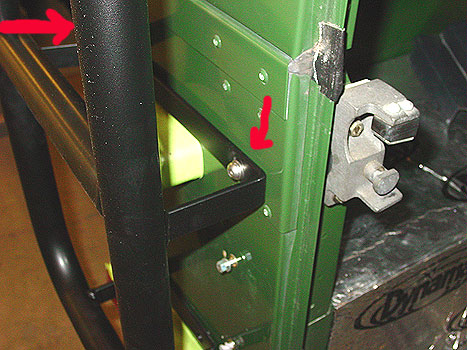
and start the upper bolts. Leave them loose at this stage.
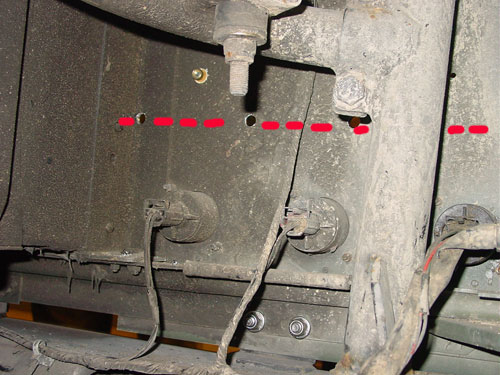
Underneath the Rover offer up the lower LH backing plate and start the bolts. The backing plate will roughly follow the red line above. Make sure not to pinch any wires under the backing plate (plate light wiring). Start all 4 bolts and leave them loose.
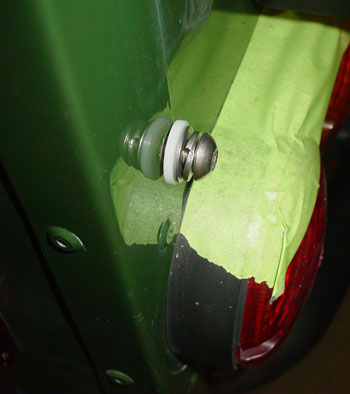
The outer 2 bolts on the LH lower mount do not go through the ladder itself. They just help spread the load over the backing plate so that the ladder is secure. The bolts supplied are stainless steel and SS corrodes the body of a Rover very quickly, so use the white isolation washers between the flat washer and the body. This will help prevent corrosion. You really only need to do this on the inboard lower bolt, but we have supplied 2 washers so that everything looks uniform.
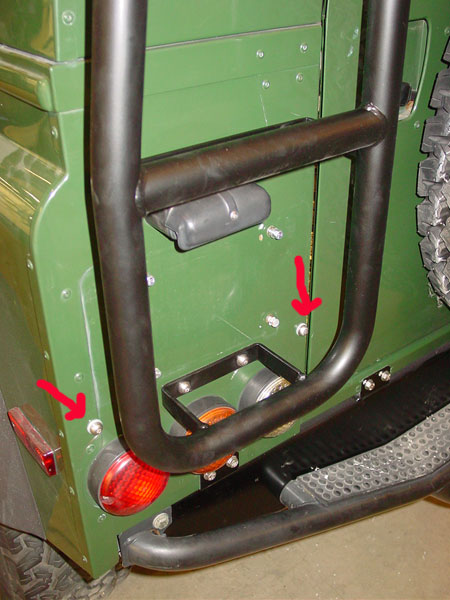
This image show the locations where you should use the plastic washer to isolate the SS from the body alloy.
Now that all the bolts are started you can move the ladder around a little to make sure it is exactly level and where you want it. Then tighten all the bolts to secure it. Then clean up the interior of drilling debris and re-install the interior parts that were removed.
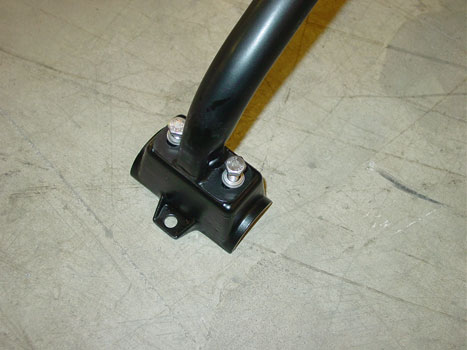
Locate the 2 front cross bars and attach the rack feet to them as shown. The bolts require locking and flat washers as shown. The feet should go on as shown, with the bolt tab to the outboard side. Attach all four feet to the cross bars, but leave the bolts loose. DO NOT damage any feet. There are no replacements at this time.
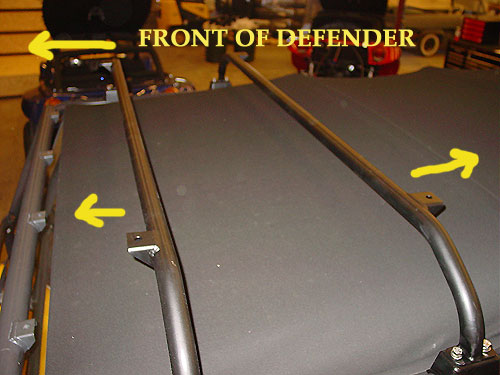
Set the 2 cross bars over the roof and onto the safari cage bars above the doors. Be sure that the mounting tabs on the cross bars are facing the ways as shown by the yellow arrows.
The front one faces forward and the rear one faces rearward.
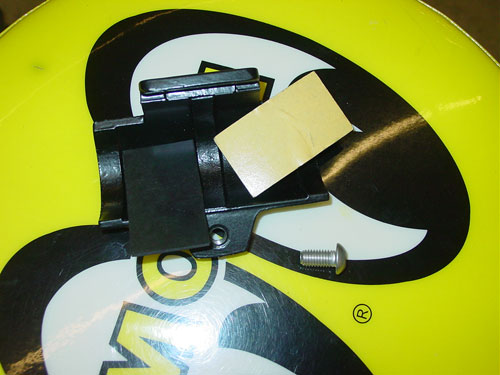
Locate the remaining parts for the rack feet. You will find 2 self adhesive rubber pads and a bolt. If you didn't read it before, discard the bolt that came in the bag with the feet. We have supplied a SS one for you instead. Be sure to use some anti-seize on all these bolts if you ever want to be able to get the rack off again. If any bolt feels tight going into the rack feet STOP! Go back and re-tap the hole and check the bolt. Anything forced will likely wreck the feet or ruin the bolt.
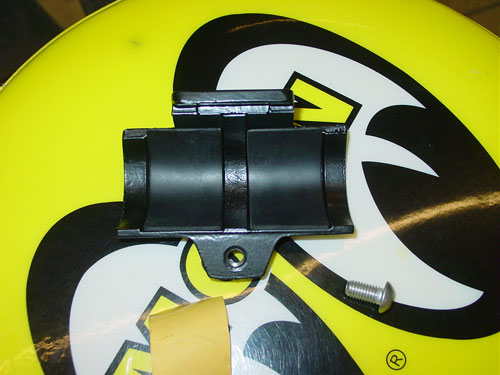
Peel the rubber strips and stick them into the lower sections of the feet as shown above.
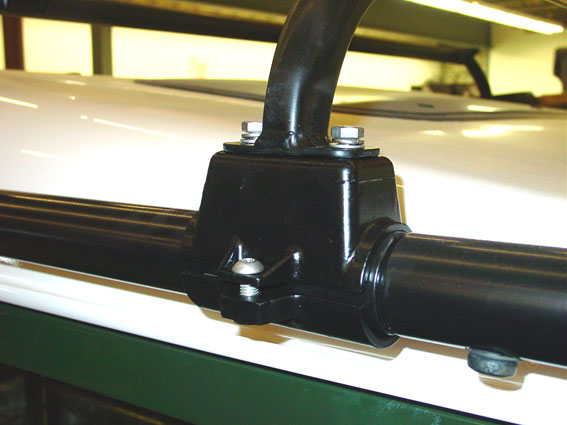
Now attach the lower portion of the clamp and start the bolt. Do not tighten the bolt at this stage, just start the threads.
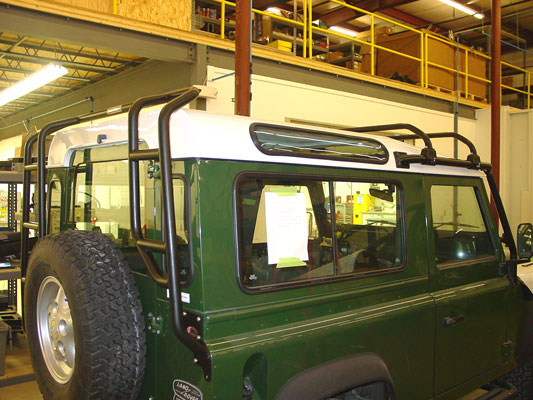
The Rover should look like this at this point. Rear ladder on and secure and the 2 front cross bars in place, but all hardware for them loose.
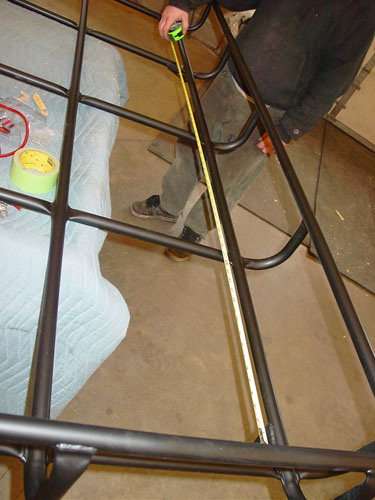
Take a measurement on the roof basket between the mounting points.

The mounting points are the corner brackets shown above.
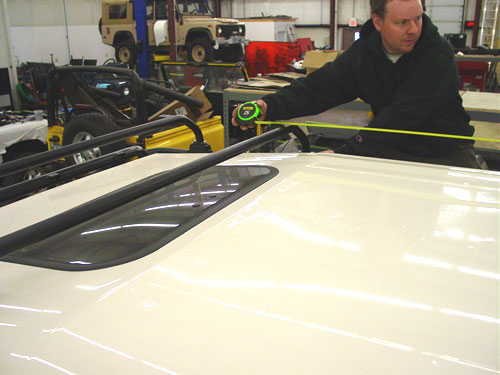
Take those dimensions and roughly set up the front cross bars so that the rack will fit once you install it on the truck. The front cross bars should still be loose so they are easy to slide to the right locations. Once everything is pretty close lug the basket to the top of the truck and set it down as close to where it goes as possible.
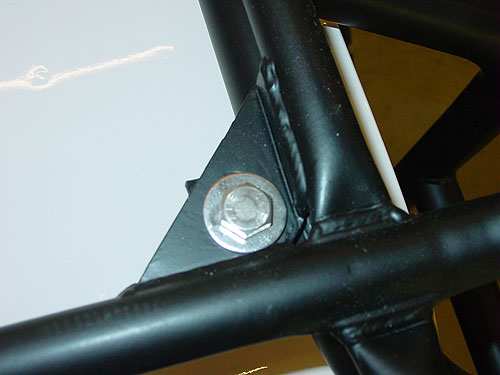
Using the SS hardware and the large flat washer, as seen above install all 6 bolt assemblies to attach the roof basket to the supports. There is some space in the holes so the rack can be moved slightly to make sure it is square and straight. Once it in the right place tighten the back two mounting bolts.
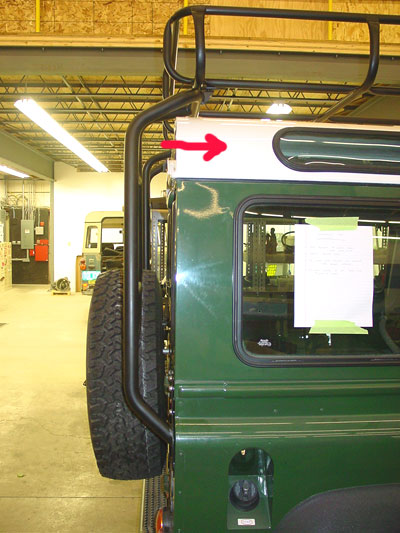
With the 2 rearmost mounting bolts securely attached to the rear ladder you can pull or push the rack around a little to make sure everything is right. In most cases you will need to tug the basket forward a little in order to achieve an even gap between the back of the 90 and the ladder. Adjust as needed and then tighten everything down.
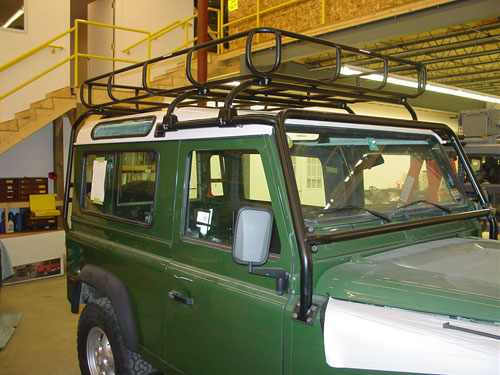
Congratulations!
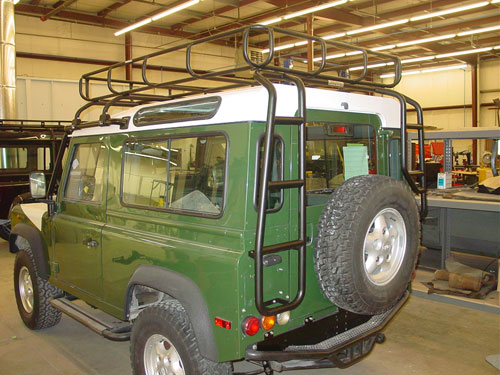
You now have a great looking and functional rack on your Defender 90 Station Wagon!
Go for a ride and show it off to your friends, or better yet pack it with camping gear and go on a trek!
Thanks again for your purchase!
ECR is your Defender source and we work hard to not only bring you the best service and restorations on these unique vehicles, but also hard to find parts like the Safety Devices rack system.
East Coast Rover Co.
Contact Information